
STEM.org Certified™ Educational Instructor + Training
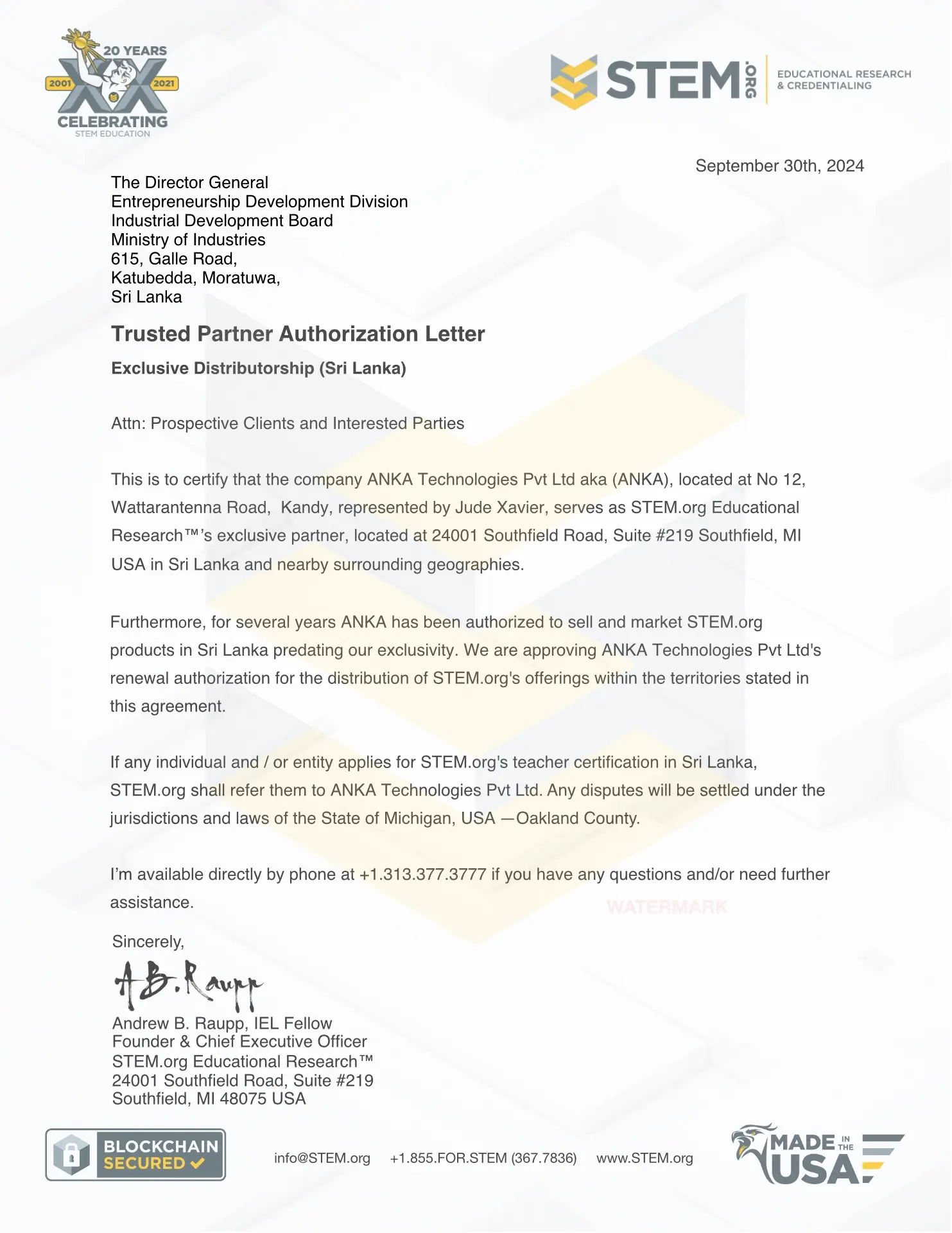
STEM.EDU.LK, the exclusive partner of STEM.org USA in Sri Lanka, offers the leading credentialing pathway in STEM education. Powered by STEM.org Educational Research™, our certification program is designed for both informal educators, such as mentors and camp instructors, and formal classroom teachers.
STEM Programs & Training for Instructors
Empower educators with globally recognized credentials, access to 1,000+ STEM lessons, and tools to build sustainable STEM initiatives.
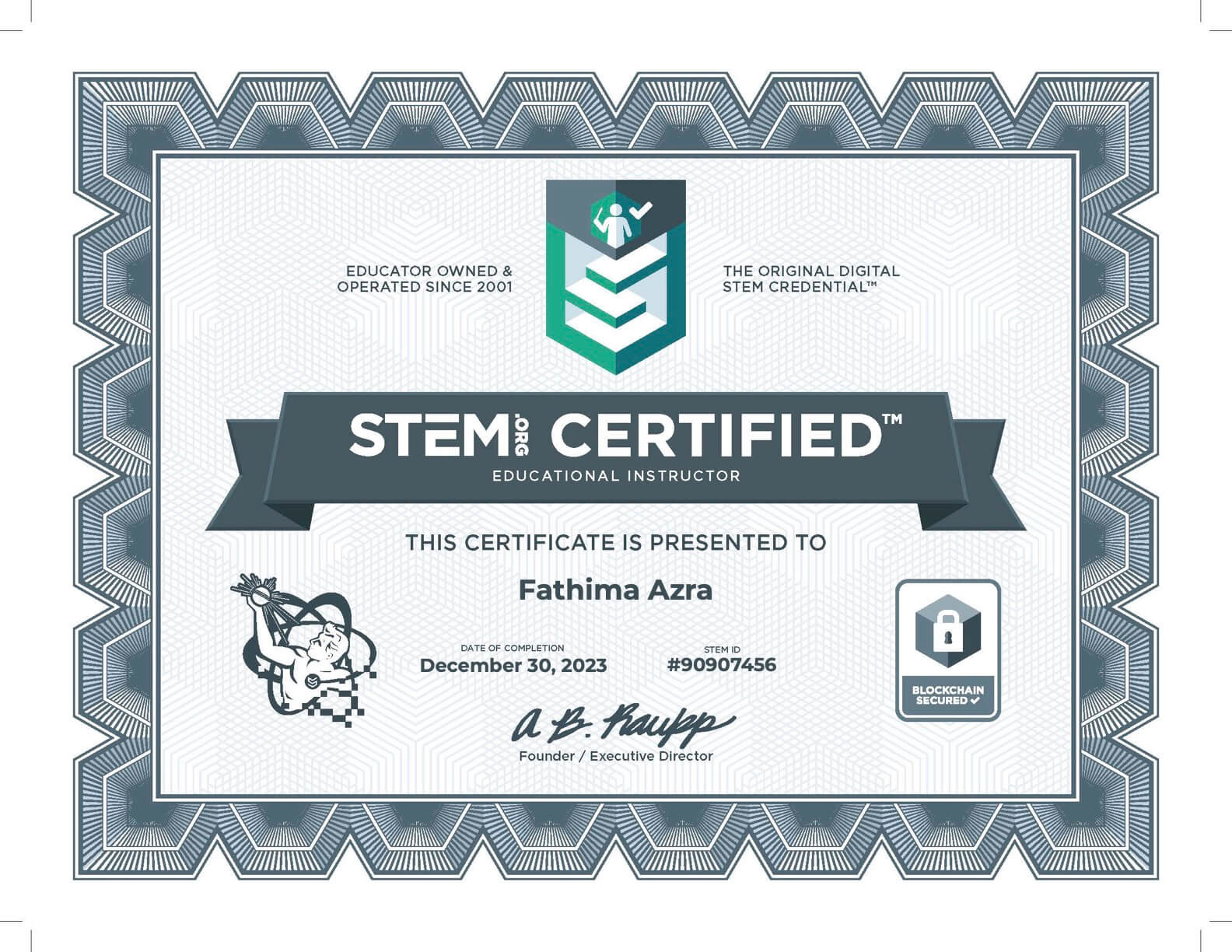
The World's Original, Digital Stem Credential for People
The STEM.org Certified™ Program provides both formal and informal educators with practical, classroom-tested activities and resources. Whether you're a school teacher or an after-school instructor, our program is designed to enhance your STEM competency and help you create impactful STEM learning environments.

STEM.org Certified™ is Open to Anyone 18-years-old and Up!
Benefits of Becoming STEM.org Certified™?
For Formal and Informal Educators
Advantages of Becoming STEM.org Certified™?
For Administrators & Program Coordinators
STEM.org Certified™
Chapter 0: Getting Started
- Welcome to the STEM.org Certified™ Examination!
- 0-1 Course Overview
- 0-2 Finding Your STEM Community
- Find Your State Requirement for Teacher Certification Renewal
Chapter 1: What is STEM?
- 1-1 History of STEM
- 1-2 Defining STEM
- 1-3 The STEM State of Mind
- 1-4 STEM vs STEAM
- 1-5 The Case for STEM
- Chapter 1 Assessment
Chapter 2: Preparing for STEM
- 2-1 Preparing Yourself
- 2-2 Models of STEM Instruction
- 2-3 STEM Across Grade Levels
- 2-4 Preparing Your Schedule Starting a STEM Program by Josh Nichols
- 2-5 Are you STEM-Ready?
- Chapter 2 Assessment
Chapter 3: STEM Lessons
- 3-1 What is Considered a STEM Lesson?
- 3-2 The Engineering Design Process
- 3-3 STEM Lesson Assessment
- 3-4 The STEM Lesson Checklist
- Chapter 3 Assessment
Chapter 4: STEM in Action
- 4-1 STEM in Action Components
- 4-2 STEM Learning Centers
- 4-3 STEM Literacy
- 4-4 Assessment Portfolios
- 4-5 STEM Supplies
- Chapter Four Assessment Preparation
- Chapter Four Assessment
Chapter 5: STEM Accessibility
- 5-1 General Adaptations Made in the Classroom Setting
- 5-2 Children with Sensory Processing Disorder Lesson
- 5-3: Autism Spectrum Disorder (ASD), ADHD/ADD, and The Gifted Child
- 5-4 Children with Vision Deficits
- 5-5 Children Who Have Visual Motor Difficulties
- 5-6 Hearing Impairment and Auditory Processing Deficits
- 5-7 Non-Verbal Children
- Chapter Five Assessment Preparation
- Chapter Five Assessment
Chapter 6: Enhancing STEM
- 6-1 Coding and Gamification
- 6-2 3D Printing and the Maker Movement
- 6-3 VR and Augmented Reality
- 6-4 Cybersecurity and Blockchain Technology
- 6-5 TRIZ Methodology
Chapter 7: Sustaining STEM
- 7-1 Promoting Diversity in STEM
- 7-2 Funding Your STEM Program
Chapter 8: Beyond STEM
- 8-1 STEM Committees
- 8-2 Beyond STEM Activities
- 8-3 Career and Technical Education
Chapter 9: STEM Internationally
- 9-1 STEM Around the World
- 9-2 Developed Countries
- 9-3 Developing and Underdeveloped Countries
- Chapter Nine Assessment Preparation
- Chapter Nine Assessment
Chapter 10: Social Responsibility
- 10-1 Social Responsibility
- 10-2 Understanding the Significance of Compassion and Empathy
- 10-3 Risks and Benefits of Technology
- 10-4 Urgency of Conservation of the Planet's Resources
- 10-5 Using STEM for Peace and Prosperity
- 10-6 Additional STEM Resources
Chapter 11: Capstone Project
- 11-1 Publishing Your Work
Chapter 12: STEM.org Certified™ FAQ
- STEM.org Certified™ FAQ
Duration - 4 weeks
Sessions: 1 per week (1.5 hours each)
Target Audience: Teachers across subjects
Goal: Equip teachers with the knowledge, tools, and strategies to confidently implement effective, inclusive, and sustainable STEM teaching practices.
WEEK 1: Understanding STEM
Theme: What is STEM and why does it matters
Objectives:
- Define STEM and its evolution
- Understand the “STEM Mindset”
- Explore the difference between STEM and STEAM
- Reflect on current teaching practice and where STEM fits in
Takeaway Task: Identify one topic/unit from your syllabus that could be turned into a STEM project.
Session Flow:
- Warm-Up Discussion: “What does STEM mean to you?”
- Presentation & Dialogue:
- The history and future of STEM
- The importance of integration (not teaching subjects in isolation)
- The "STEM Mindset" — problem-solving, creativity, resilience
- Activity: Analyze a sample lesson and identify STEM elements
- Reflection: Participants write a short journal entry: “Where do I see opportunities for STEM in my current curriculum?”
WEEK 2: Designing Effective STEM Lessons
Theme: STEM instructional design and the Engineering Design Process (EDP)
Objectives:
- Understand key features of an effective STEM lesson
- Learn how to apply the Engineering Design Process (EDP)
- Use the STEM.org lesson checklist for self-assessment
Takeaway Task: Develop a full STEM lesson plan using the checklist (to present in Week 4).
Session Flow:
- Quick Share: Participants present their selected topic from Week 1
- Mini-Lecture:
- Structure of a STEM lesson
- Integrating the EDP (Ask, Imagine, Plan, Create, Test, Improve, Share)
- Activity: Create a mini STEM lesson idea in pairs using the EDP
- Checklist Review: Introduce the STEM.org lesson checklist and apply it to the created mini-lesson
WEEK 3: Equity, Tools, and Inclusion in STEM
Theme: Creating accessible and engaging STEM environments
Objectives:
- Adapt STEM lessons for diverse learners and special needs
- Explore low-cost tools, coding, makerspaces, and emerging tech
- Understand the role of inclusivity and representation in STEM
Takeaway Task: Finalize your lesson with inclusive strategies and at least one tool to enhance engagement.
Session Flow:
- Warm-Up: Case study: STEM for a student with ADHD or visual impairment
- Presentation:
- Strategies for inclusive STEM classrooms
- Universal Design for Learning (UDL)
- Tech tools (e.g., Tinkercad, Scratch, Teachable Machine)
- Demo & Discussion: Try out one digital tool or accessibility adaptation
- Reflection: Brainstorm and share how to adapt your STEM lesson for diverse learners
WEEK 4: Sustaining STEM Practice & Capstone Sharing
Theme: Long-term planning, career links, and sharing outcomes
Objectives:
- Connect STEM to career pathways (CTE/STEM careers)
- Plan for sustainable STEM practice in your school
- Share lesson plans and reflect on peer ideas
Final Task: Submit your lesson + self-evaluation checklist. Optional certificate issued upon submission.
Session Flow:
- Opening: Group brainstorm — “What makes STEM sustainable in a school?”
- Presentation:
- How to form STEM committees
- Engaging with parents and the community
- Real-world STEM careers and role models
- Capstone Presentations: Teachers present their STEM lesson plans (5–7 min each)
- Group Feedback: Using the STEM.org checklist as review criteria
- Wrap-Up Discussion: What will you do in the next 30 days to implement this?
Support and Guidance
This certification program will be a 100% self-paced online study program for approximately 10 - 12 weeks. We shall provide you with support and guidance throughout when required to complete the certification program.
Get Registered for
STEM.org Certified™
Registration Form
- Complete the Registration Form
- Make your payment
- Our support team will contact you shortly
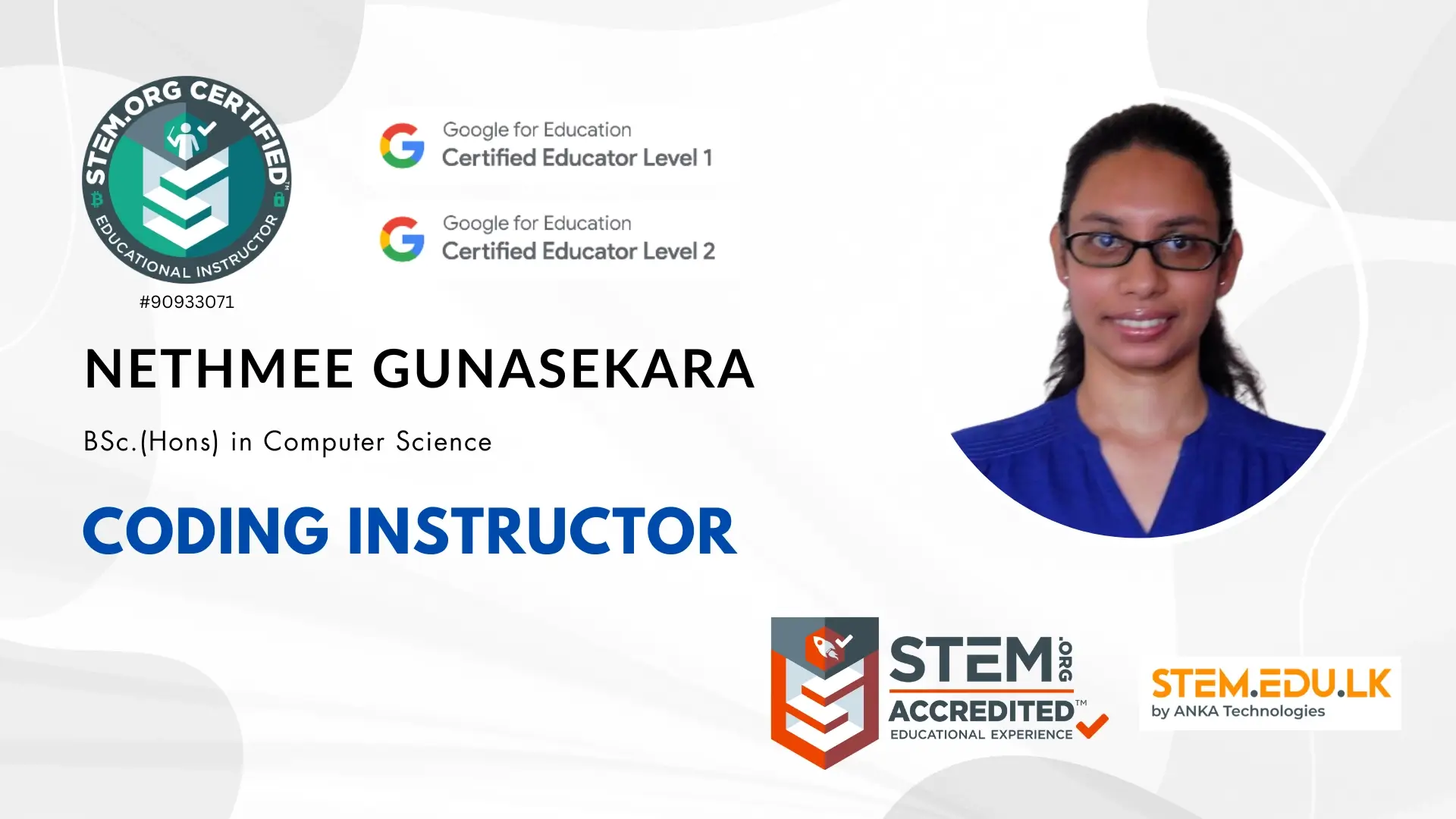
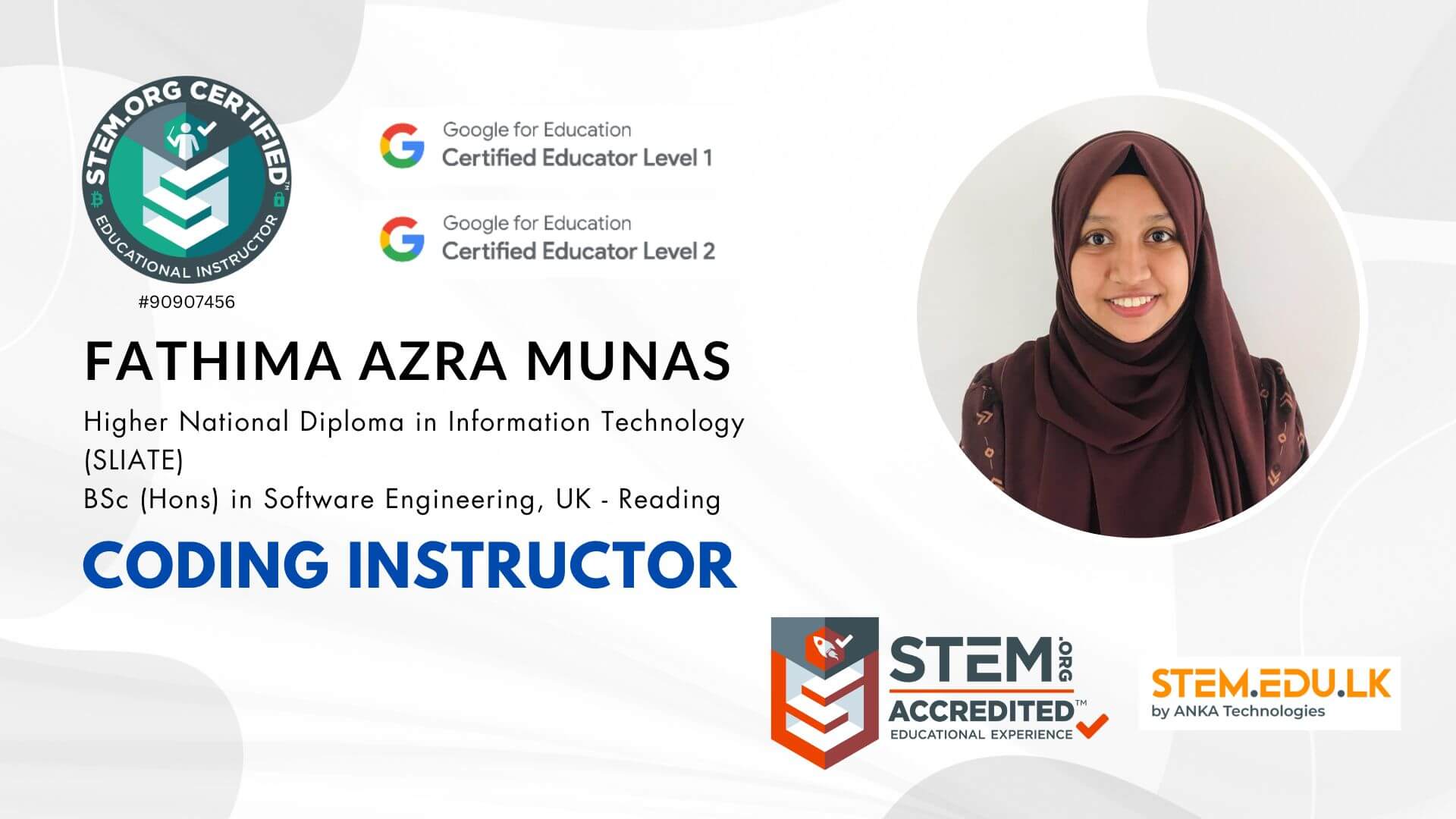
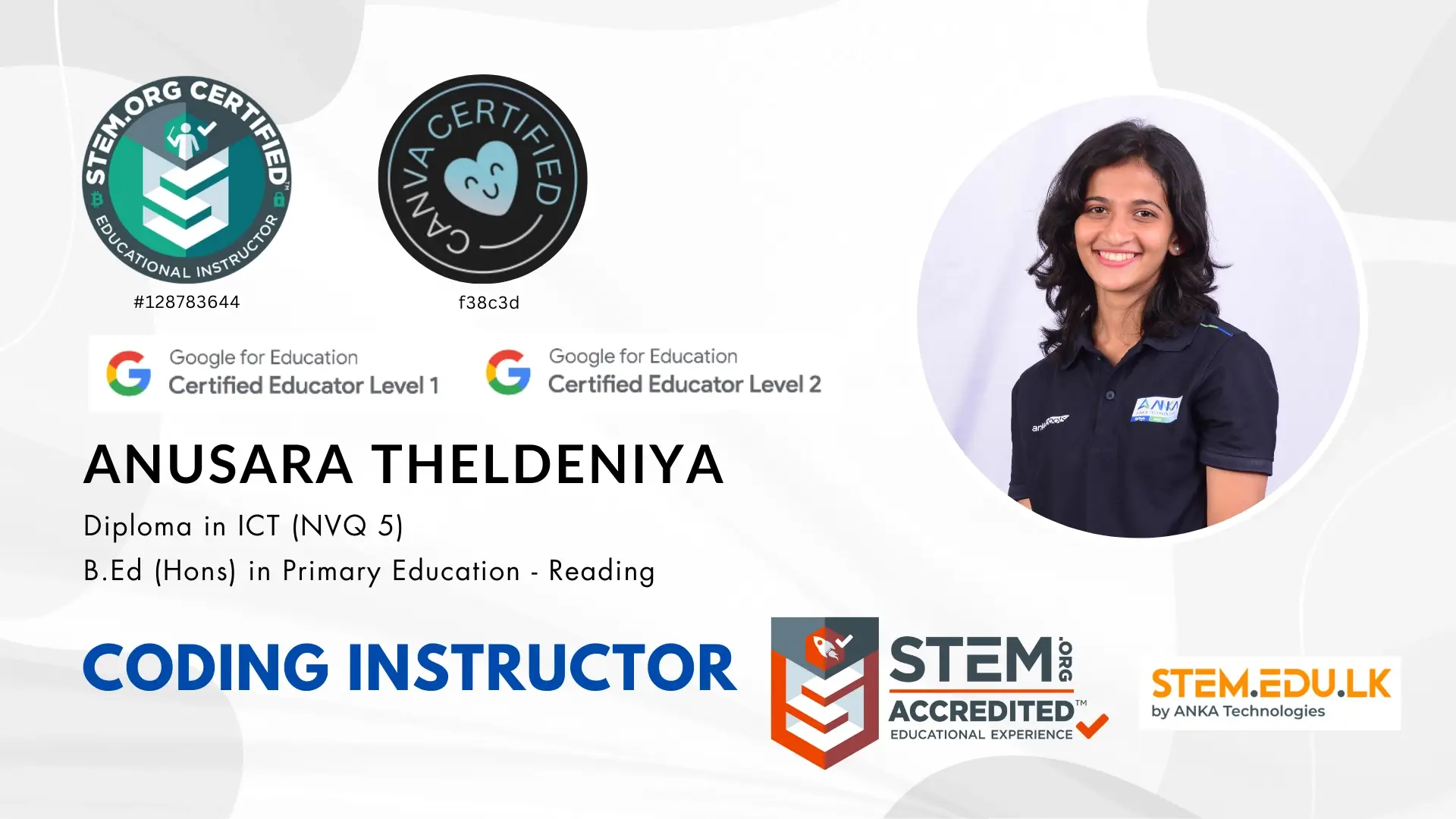
STEM.EDU.LK STEM.org Certified™ Educational Instructors
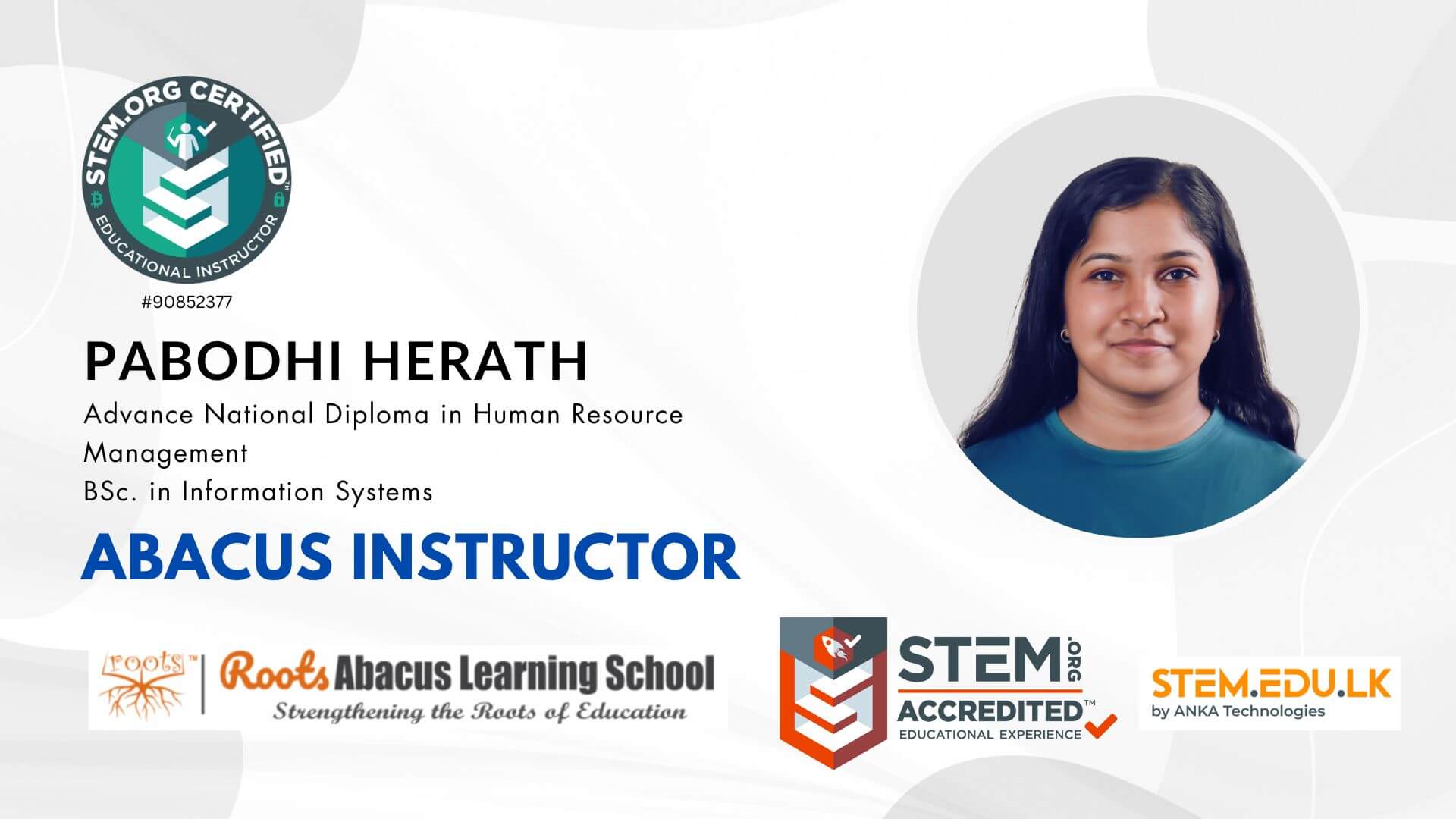
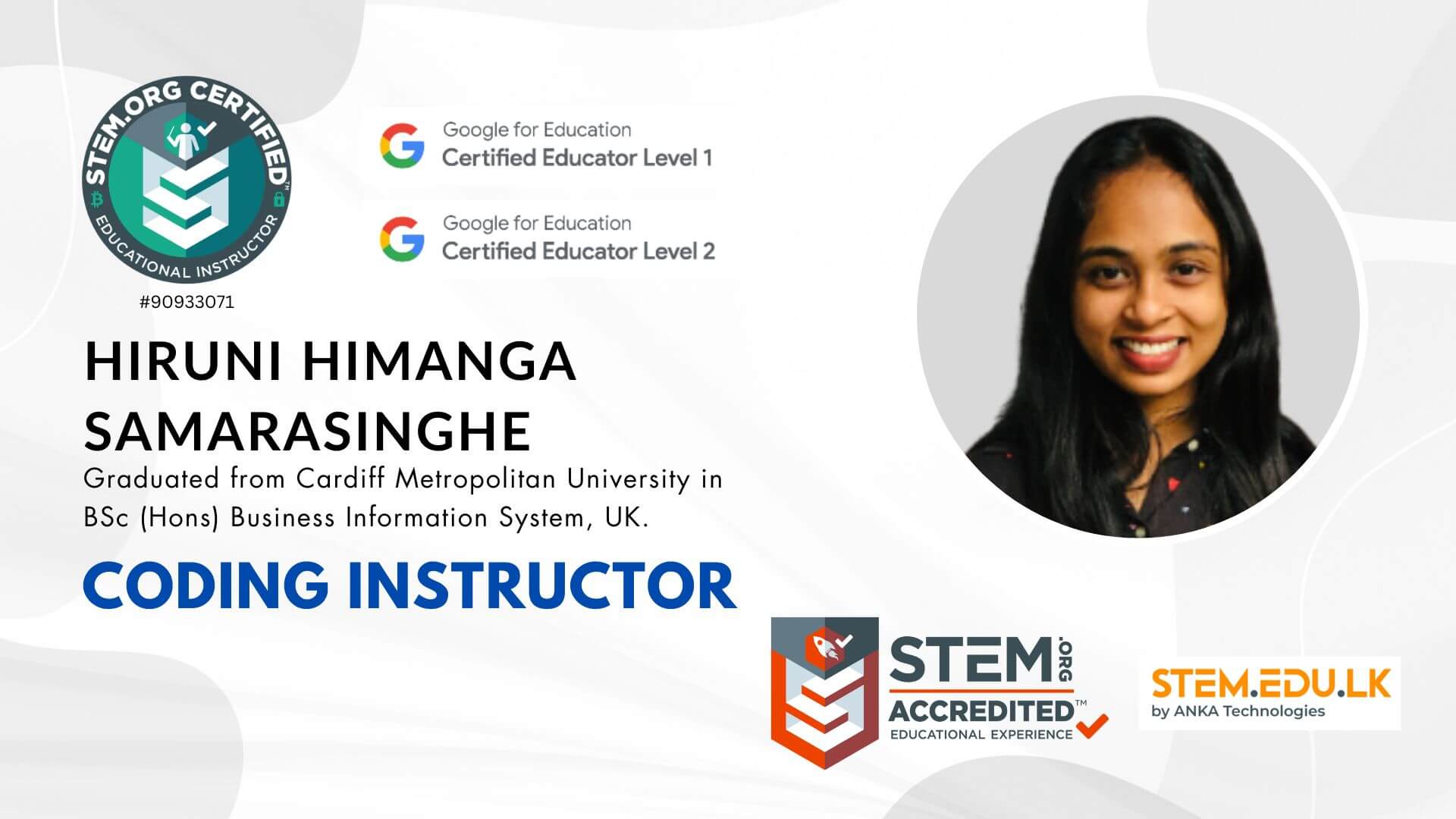
Payment Options for STEM.org Certified™ Educational Instructor
Pay in LKR
LKR 48,000
LKR 60,000
Select XSPLIT for instalment plans
Pay in USD
USD 152.50
USD 200.00
Select XSPLIT for instalment plans
Our Blockchain Security
Every STEM.org USA credential is securely recorded in blockchain technology, ensuring each certification is tamper-proof and instantly verifiable. Since 2018, this pioneering approach has made it possible for third parties to confirm the authenticity of credentials with absolute certainty.